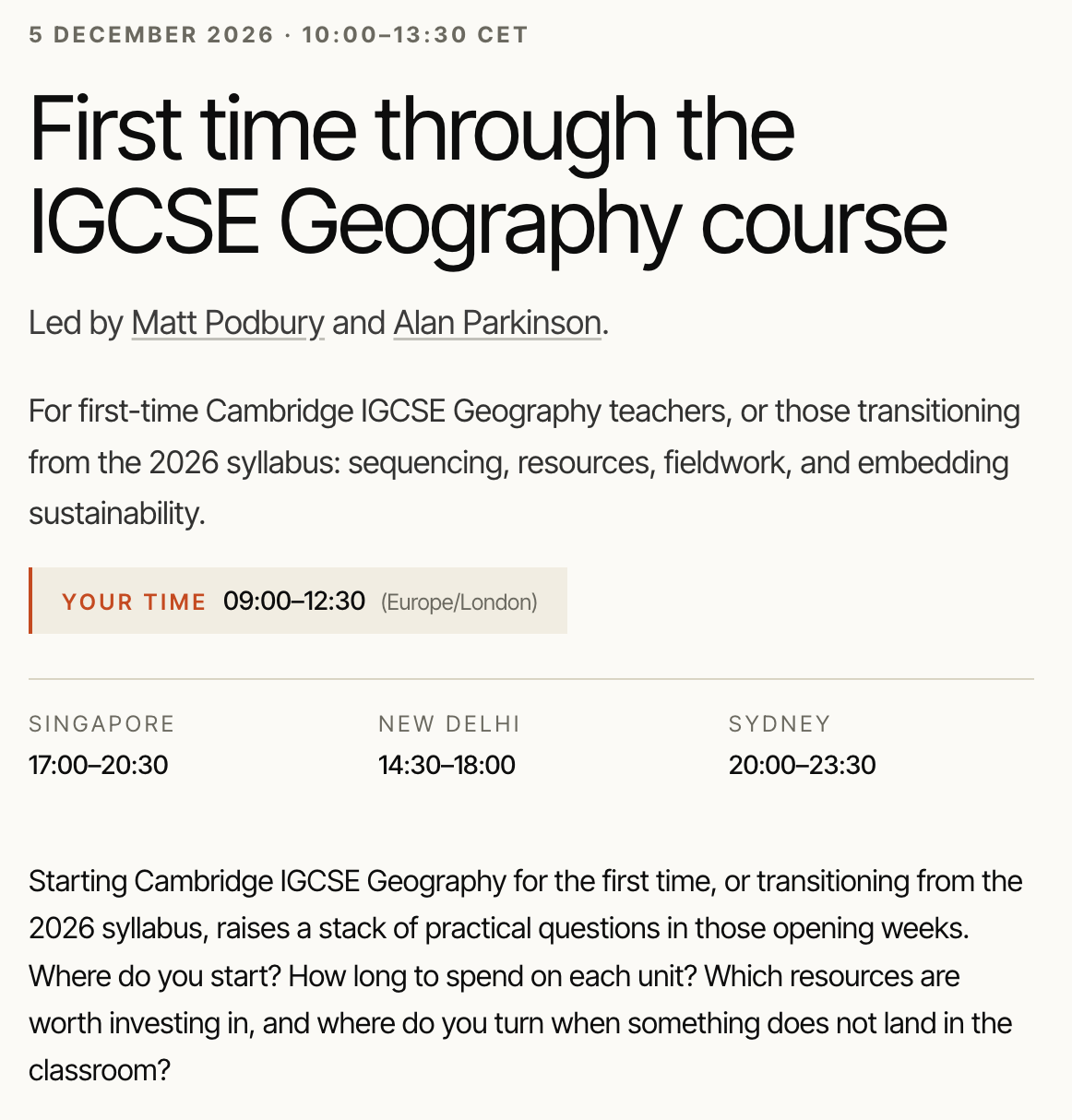
You still have time to book to join Matt Podbury and I for a morning of thinking through the teaching of iGCSE Geography, organised by International Geography Training.
It takes place on the 5th of December 2026.
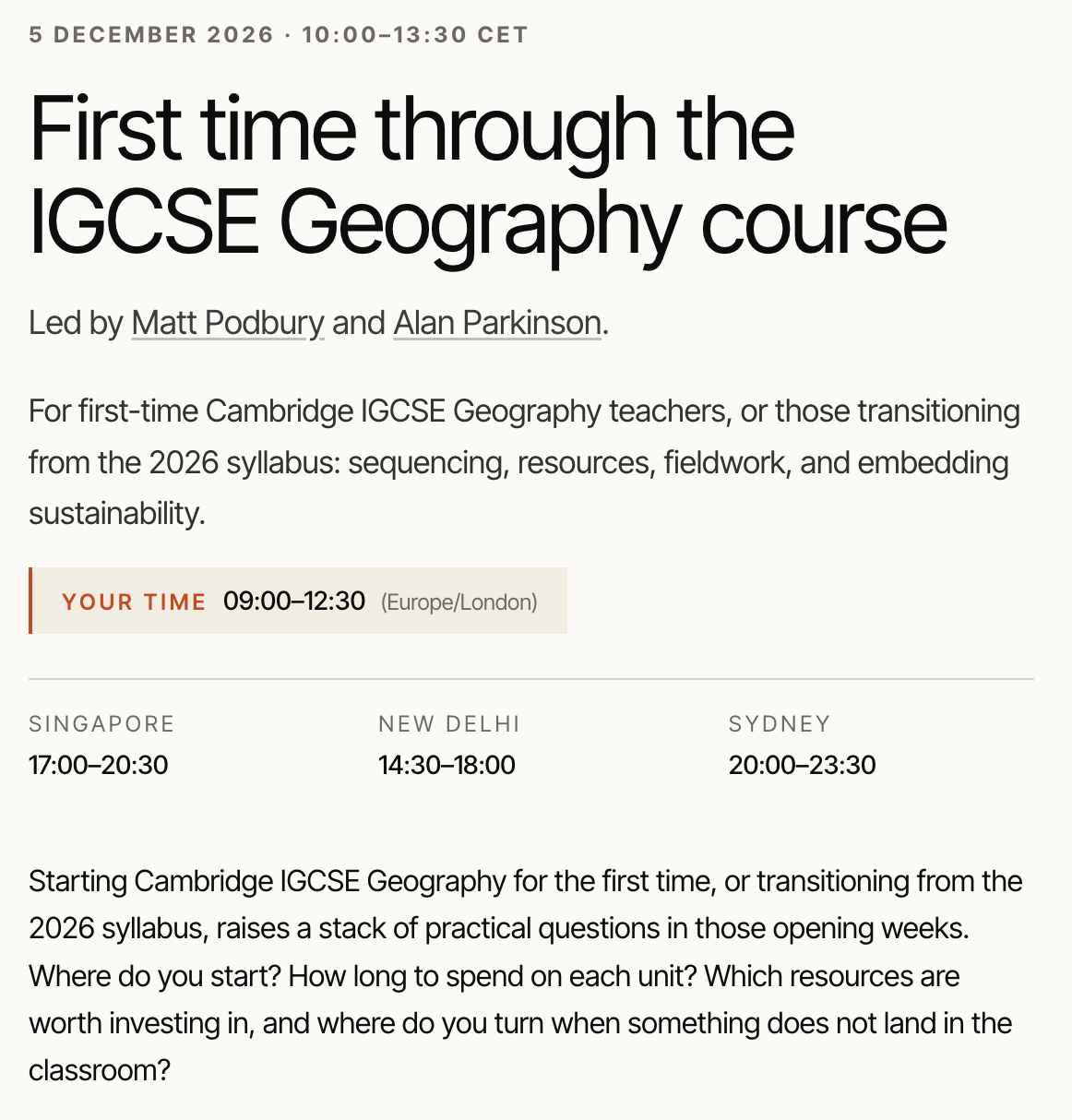
Some of may be half a term through the teaching of the course for the first time and want some sort of check that you’re on the right lines. Matt will share some thinking from his own teaching, including guidance on sequencing the topics, and preparing for assessments as well as planning fieldwork and coursework.
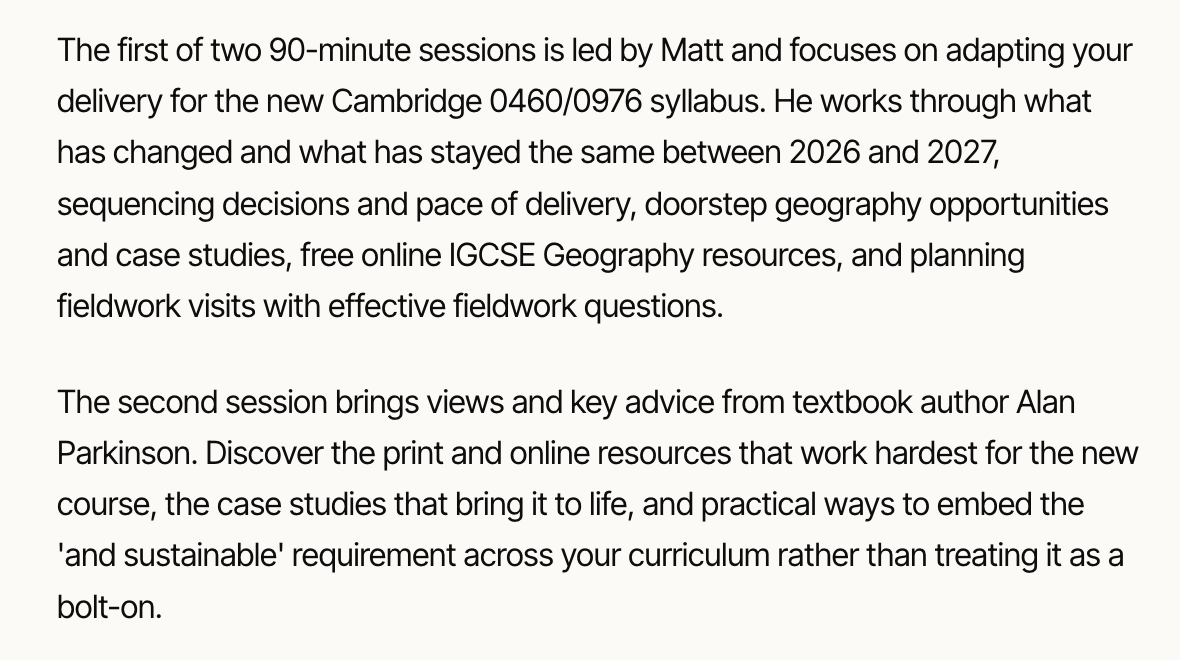
I’ll then move onto the resourcing side and suggest ideas for delving into the syllabus to identify some ideas for the detailed specific examples which students will be expected to draw on when answering the exam questions.
How can teachers resource this new course, and draw on their own contexts and personal passions?
As the documents say:
This syllabus gives you the flexibility to design a course that will interest, challenge and engage your learners.
Where appropriate you are responsible for selecting resources and examples, topics and subject contexts to support your learners’ study.
These should be appropriate for the learners’ age, cultural background and learning context as well as complying with your school policies and local legal requirements.
Candidates are expected to be able to name and locate continents and study examples drawn from a variety of places and environments.
What are the best ways to meet those requirements above?
The draft contents for the session is as follows:
Back in 2023 I was the Series Editor and co-author of the 4th edition of the Collins book for the Cambridge iGCSE Specification.
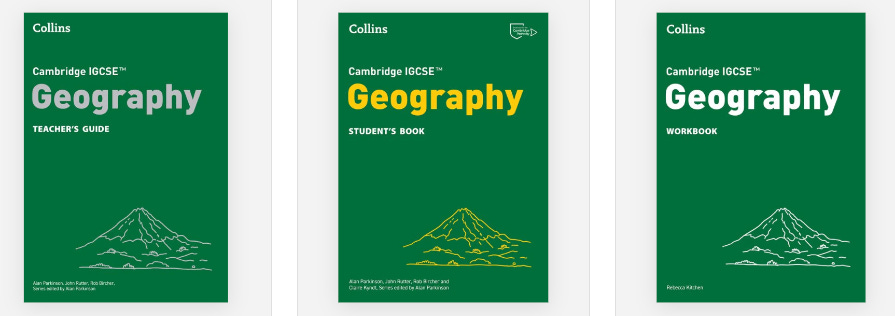
The book is still available of course, and can be located in all the countries and regions where iGCSE geography is being taught.
Published in March 2025
Collins Cambridge IGCSE Geography Student Book has been fully updated to cover the Cambridge IGCSE, IGCSE (9-1) and O Level Geography syllabuses (0460/0976/2217) with in-depth content presented in a clear and easily accessible format.
This Student Book provides full coverage of the Cambridge IGCSE, IGCSE (9-1) and O Level Geography syllabuses (0460/0976/2217) for examination from 2027.
This resource is endorsed for the Cambridge Pathway to support the for the Cambridge Pathway to support the syllabuses (0460/0976/2217) for examination from 2027.
Find what you need easily with content divided into Human Geography, Physical Geography, and Geographical Skills for coursework and investigations.
Engage and inspire learning with fascinating geographical facts, investigations and questions.
Encourage students to explore core themes and skills and make links between the Detailed Specific Examples and their own local contexts.
Give opportunities for practice and self-assessment with end-of-unit review questions and sample answers.
Support students with contextual glossaries and clear, illustrated explanations.
Be confident in the content and approach – this resource has been written by highly experienced Geography teachers and Geographers.
Author
Alan Parkinson, John Rutter, Rob Bircher and Claire Kyndt, Series edited by Alan Parkinson
There are some useful places to turn to for support of course.
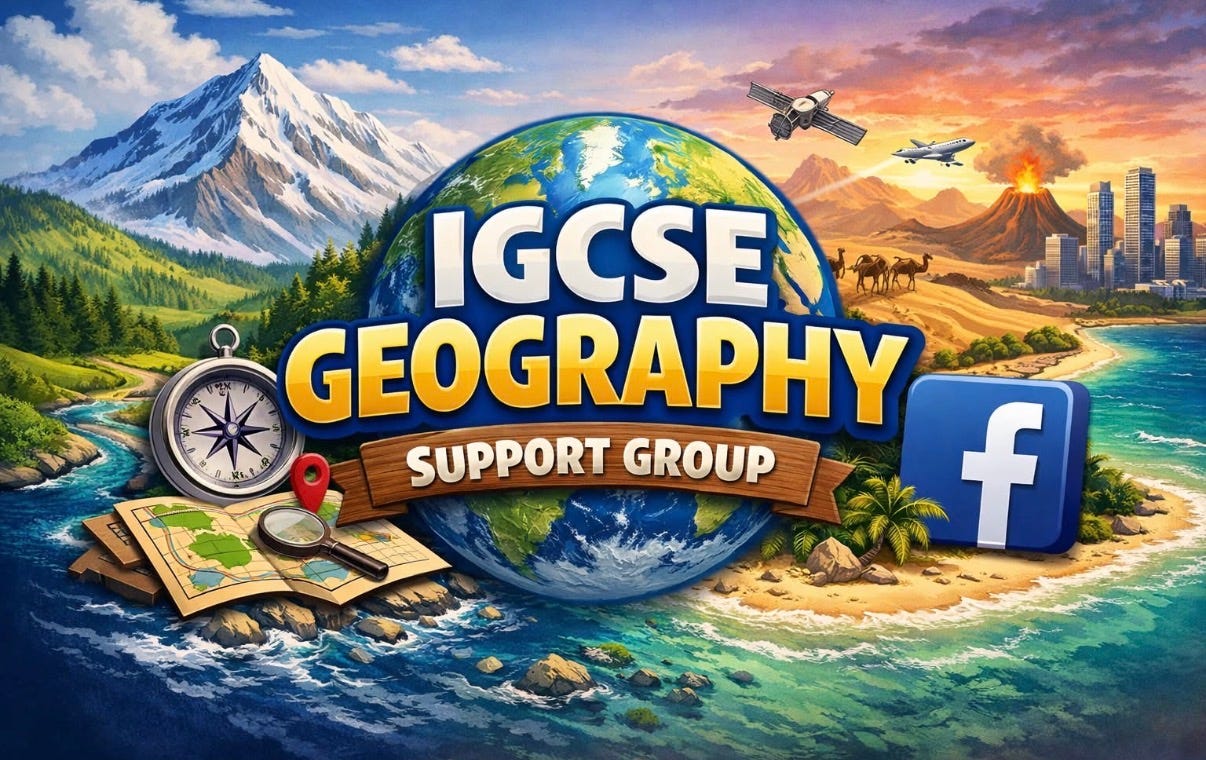
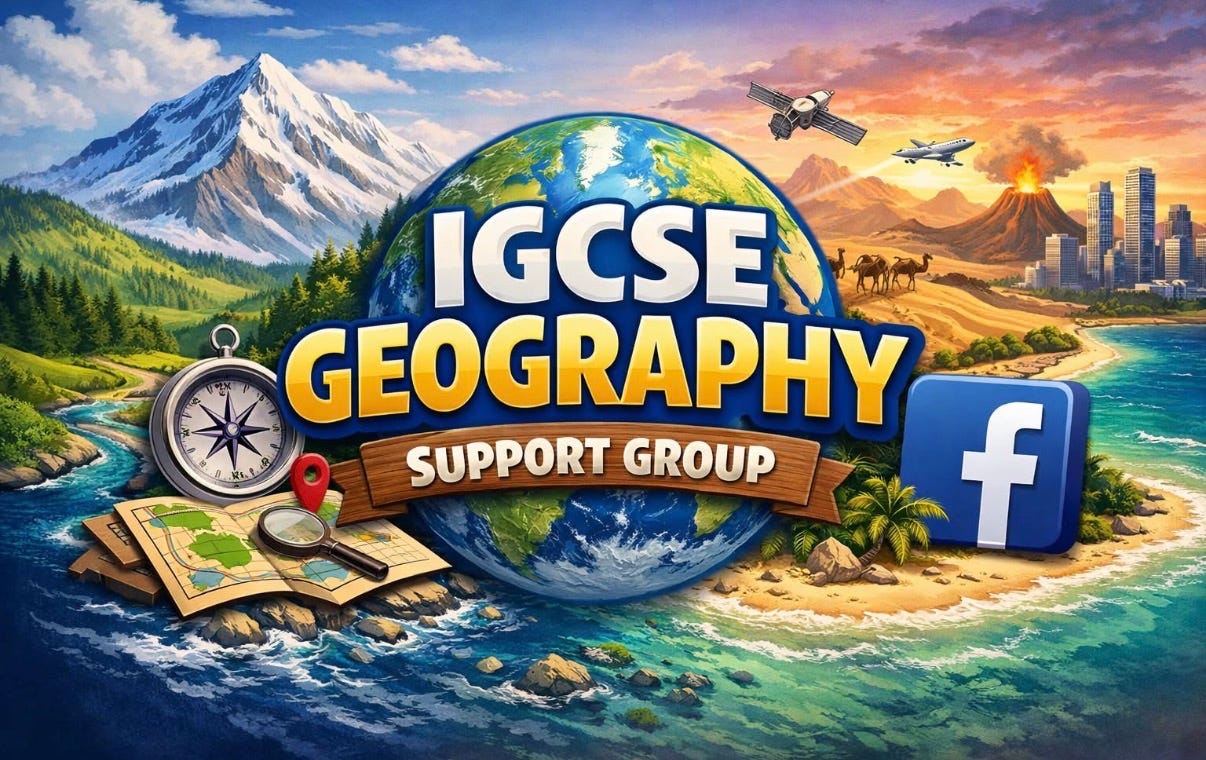
There’s a Facebook group, which Matt created and moderates. I’ll let him off the AI image this time…
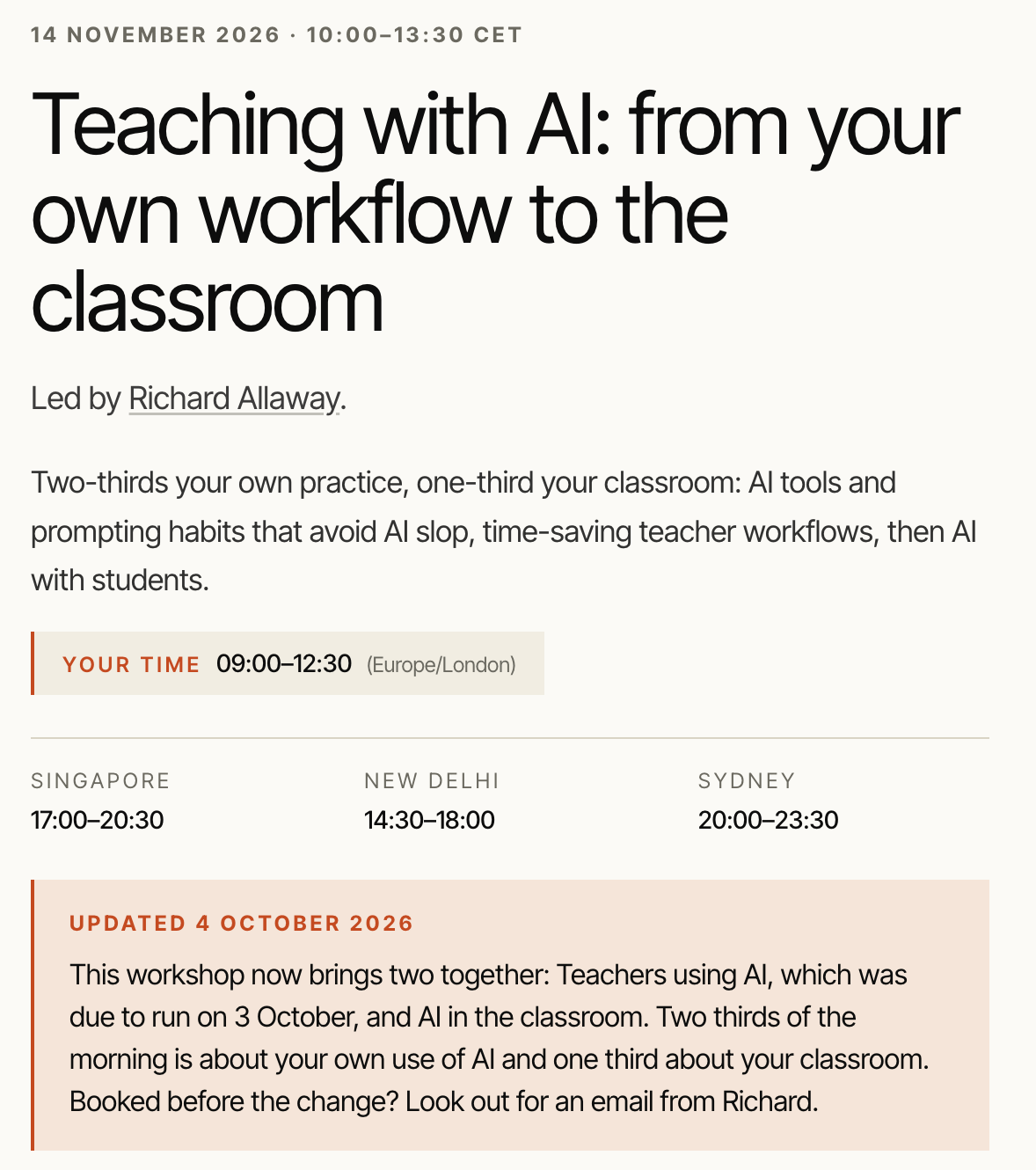
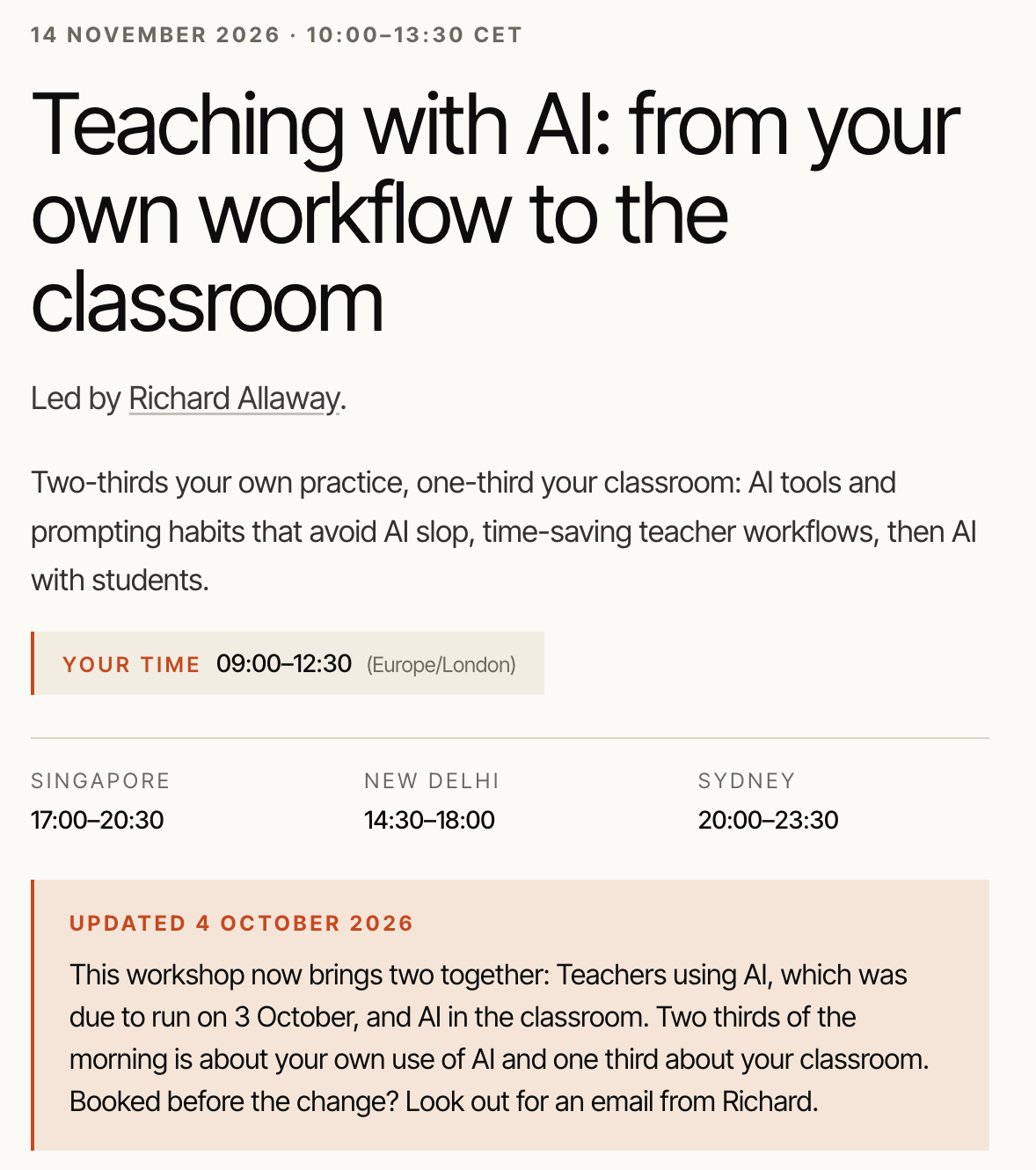
It’s also worth mentioning a workshop running in November if you are interested in teaching with AI.
Hopefully ‘see’ some of you in December. I’ll be sat in my bedroom as usual with my three pebbles for company.
It takes place on the 5th of December 2026.
Some of may be half a term through the teaching of the course for the first time and want some sort of check that you’re on the right lines. Matt will share some thinking from his own teaching, including guidance on sequencing the topics, and preparing for assessments as well as planning fieldwork and coursework.
I’ll then move onto the resourcing side and suggest ideas for delving into the syllabus to identify some ideas for the detailed specific examples which students will be expected to draw on when answering the exam questions.
How can teachers resource this new course, and draw on their own contexts and personal passions?
As the documents say:
This syllabus gives you the flexibility to design a course that will interest, challenge and engage your learners.
Where appropriate you are responsible for selecting resources and examples, topics and subject contexts to support your learners’ study.
These should be appropriate for the learners’ age, cultural background and learning context as well as complying with your school policies and local legal requirements.
Candidates are expected to be able to name and locate continents and study examples drawn from a variety of places and environments.
What are the best ways to meet those requirements above?
The draft contents for the session is as follows:
- Resourcing 0460 - an author’s dilemmas
- Strategies in the classroo
- Making the most of your local context - what’s your story?
- Sustainability: what are some realistic efforts to achieve it?
- Next steps
- Questions
Back in 2023 I was the Series Editor and co-author of the 4th edition of the Collins book for the Cambridge iGCSE Specification.
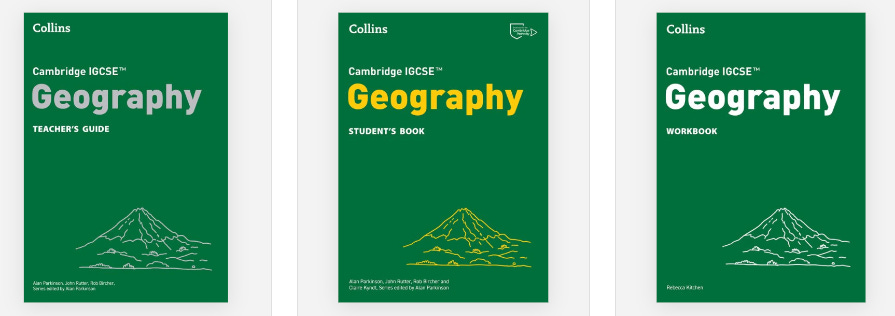
The book is still available of course, and can be located in all the countries and regions where iGCSE geography is being taught.
Published in March 2025
Collins Cambridge IGCSE Geography Student Book has been fully updated to cover the Cambridge IGCSE, IGCSE (9-1) and O Level Geography syllabuses (0460/0976/2217) with in-depth content presented in a clear and easily accessible format.
This Student Book provides full coverage of the Cambridge IGCSE, IGCSE (9-1) and O Level Geography syllabuses (0460/0976/2217) for examination from 2027.
This resource is endorsed for the Cambridge Pathway to support the for the Cambridge Pathway to support the syllabuses (0460/0976/2217) for examination from 2027.
Find what you need easily with content divided into Human Geography, Physical Geography, and Geographical Skills for coursework and investigations.
Engage and inspire learning with fascinating geographical facts, investigations and questions.
Encourage students to explore core themes and skills and make links between the Detailed Specific Examples and their own local contexts.
Give opportunities for practice and self-assessment with end-of-unit review questions and sample answers.
Support students with contextual glossaries and clear, illustrated explanations.
Be confident in the content and approach – this resource has been written by highly experienced Geography teachers and Geographers.
Author
Alan Parkinson, John Rutter, Rob Bircher and Claire Kyndt, Series edited by Alan Parkinson
There are some useful places to turn to for support of course.
There’s a Facebook group, which Matt created and moderates. I’ll let him off the AI image this time…
It’s also worth mentioning a workshop running in November if you are interested in teaching with AI.
Hopefully ‘see’ some of you in December. I’ll be sat in my bedroom as usual with my three pebbles for company.
Comments