While researching the former Presidents of the Geographical Association for the blog project which formed part of my GA Presidential journey, I reached the year 1981 and was reintroduced to Professor Bill Mead.
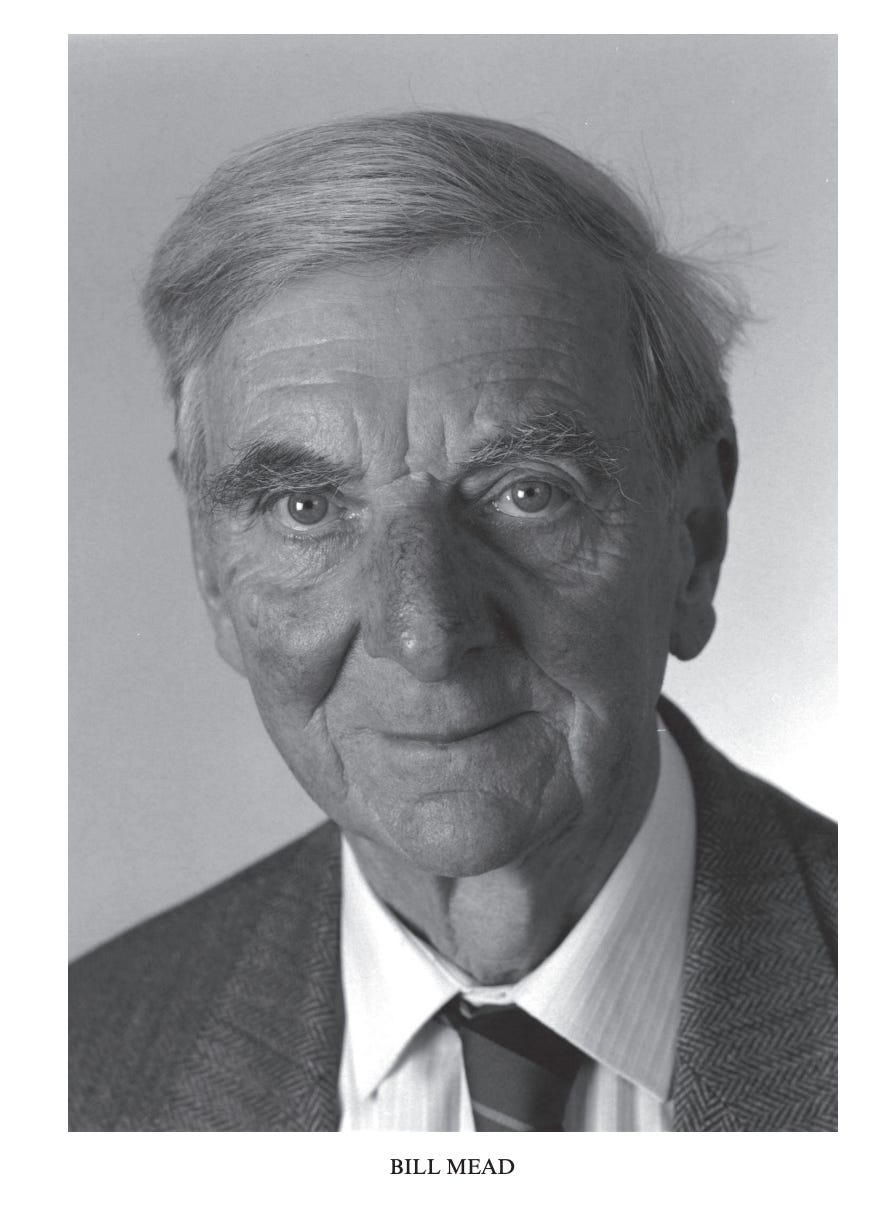
He was a real gentleman who I met a number of times while working at Solly Street - where he was always a popular visitor with the staff at HQ. He taught at UCL for many years, and had a house in Kensington. He was an expert on Scandinavian geography, and lived a long and eclectic life of a kind which has disappeared now, including wartime service. I like this quote from Hugh Clout who knew him well:
'Lectures were delivered without notes, as the spirit moved...replete with references to poetry, music, plays, works of fiction and even restaurants'.1
I compiled quite a large library of books while I was researching the GA Presidents, and one of them was this thin hardback book that Bill compiled, in the style of a commonplace book, with an assemblage of pieces.
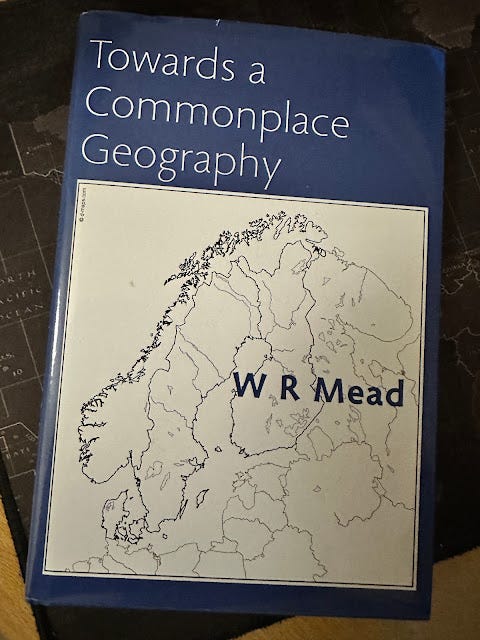
Image: My copy of Bill’s book
Bill Mead describes the work that he did to put the Commonplace book together in this piece on the GA Presidents blog. It was published in 2015, and was unfortunately published posthumously by John T Smith, who had been working on the book with Bill - who died just over a week short of what would have been his 100th birthday. Such books may also be called a Silva reru, which is Latin for “forest of things”, a synonym from the 17th century for a commonplace book.
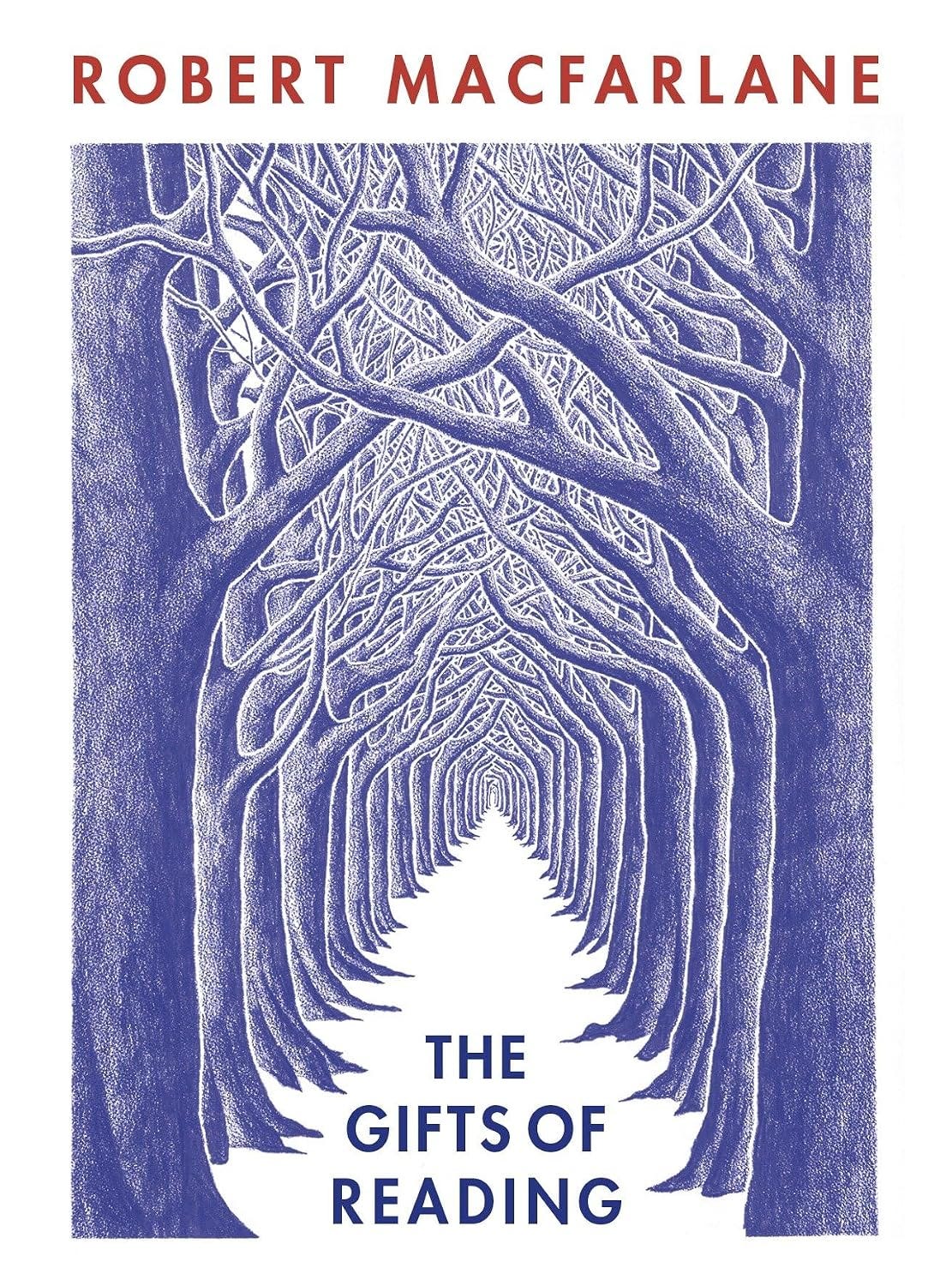
While completing this, I reread Robert MacFarlane’s brief and luminous ‘The Gifts of Reading’ ahead of reading the new book from Stephen Willshaw.
In the book, MacFarlane channels Patrick Leigh Fermor’s ‘A Time of Gifts’ (1977) - the first in an eventual trilogy of books remembering a walking journey from the Hook of Holland to Constantinople (Istanbul) taken in 1933/4. The second was ‘Between the Woods and the Water’ (1986). The final volume, ‘The Broken Road’ was finished by Artemis Cooper and eventually published in 2013.
MacFarlane describes the distinctive cover of the book and the impact it had on him. It’s also a book that I love… it’s a journey through a world that was lost within a decade…
He then goes on to talk about a German word: sehnsucht. He provides a meaning that is: a yearning or wistful longing for the unknown and the mysterious.
Wikipedia says:
It is sometimes felt as a longing for a far-off country, but not a particular earthly land which we can identify. Furthermore, there is something in the experience which suggests this far-off country is very familiar and indicative of what we might otherwise call “home”. In this sense it is a type of nostalgia, in the original sense of that word. At other times it may seem as a longing for a someone or even a something. But the majority of people who experience it are not conscious of what or who the longed for object may be, and the longing is of such profundity and intensity that the subject may immediately be only aware of the emotion itself and not cognizant that there is a something longed for.
C.S.Lewis, who lectured at the University of Oxford at the same time as J.R.R. Tolkien (and were fellow ‘Inklings’.) The writings of C.S. Lewis are connected to this idea of sehnsucht. For him the meaning was a little different and connects to the main themes of the Chronicles of Narnia and the experiences of many of the characters in the book, including the children who move between the ‘real world’ and the world beyond the wardrobe.
Ryan Bate, who has worked in Washington DC for about four years has also written about the idea of the Commonplace over on his blog.
He shares his own definitions and also mentions Tim Cresswell and his excellent book ‘Maxwell Street’, which sits among the select volumes in a bookcase I keep next to my desk. Cresswell shares this quote in the book - one picked out by Ryan too:
“Reading and writing were therefore inseparable activities. They belonged to a continuous effort to make sense of things, for the world was full of signs: you could read your way through it; and by keeping an account of your readings, you made a book of your own, one stamped with your own personality.”
Robert Darnton, ‘Extraordinary Commonplaces’,New York Review of Books, 21st December 2000.
There are various other terms that could be used for this sort of collation of items and Ryan - like myself - uses the analogy of a magpie alighting on shiny things and collecting them - a bird I always salute if I see them while driving.
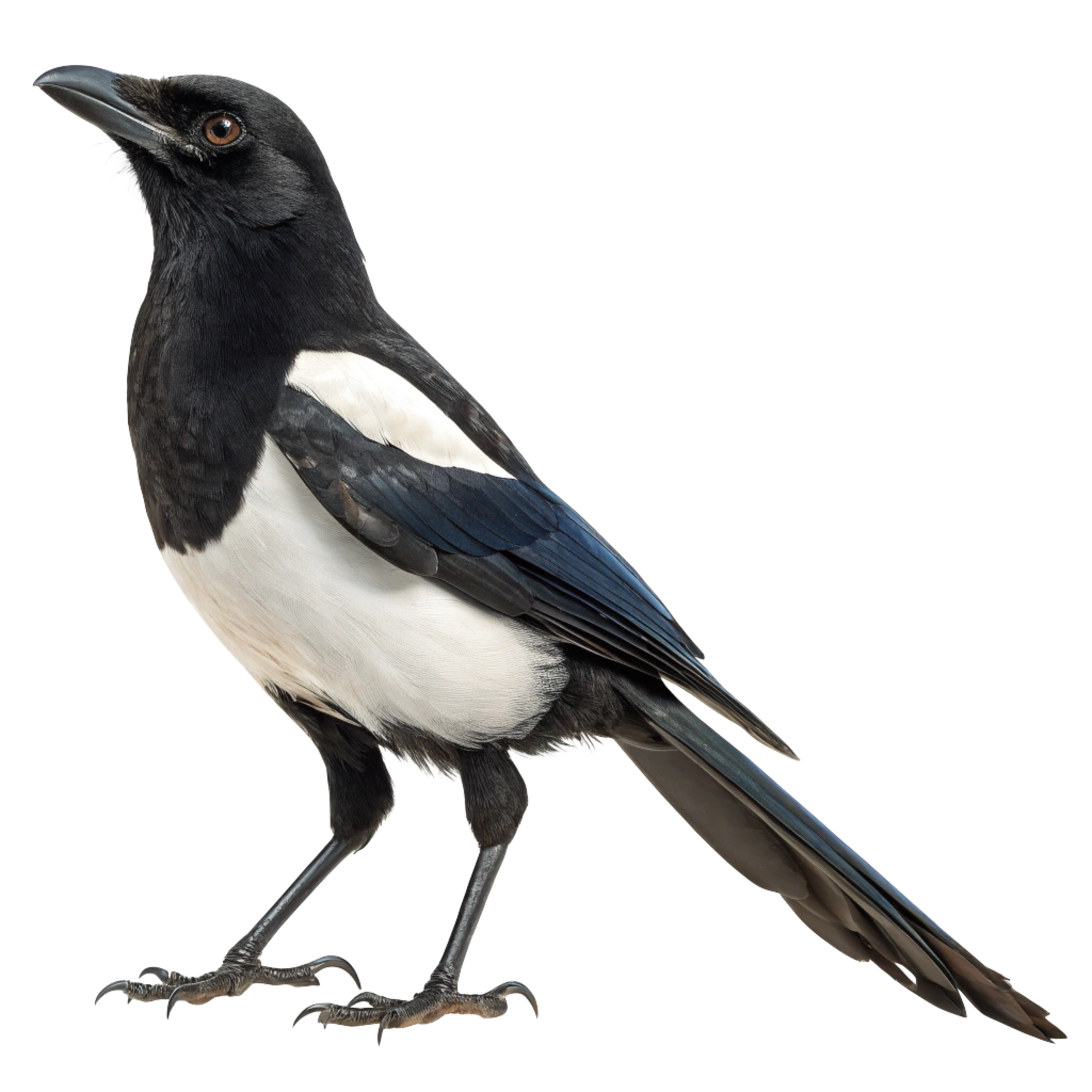
Source: https://www.vecteezy.com/png/59049521-eurasian-magpie-bird-detailed-profile-image-high-resolution-studio-shot-black-background
The hoarding of magpies is something which comes to glorious fruition at the end of the Detectorists: a TV series that I have written about many times previously and represents a high point in the medium.

I used an image of a magpie for some years when working with ITE colleagues, and provided different suggestions for collecting resources - picking up free maps, asking travel agents for old travel posters to spruce up tired classrooms etc.
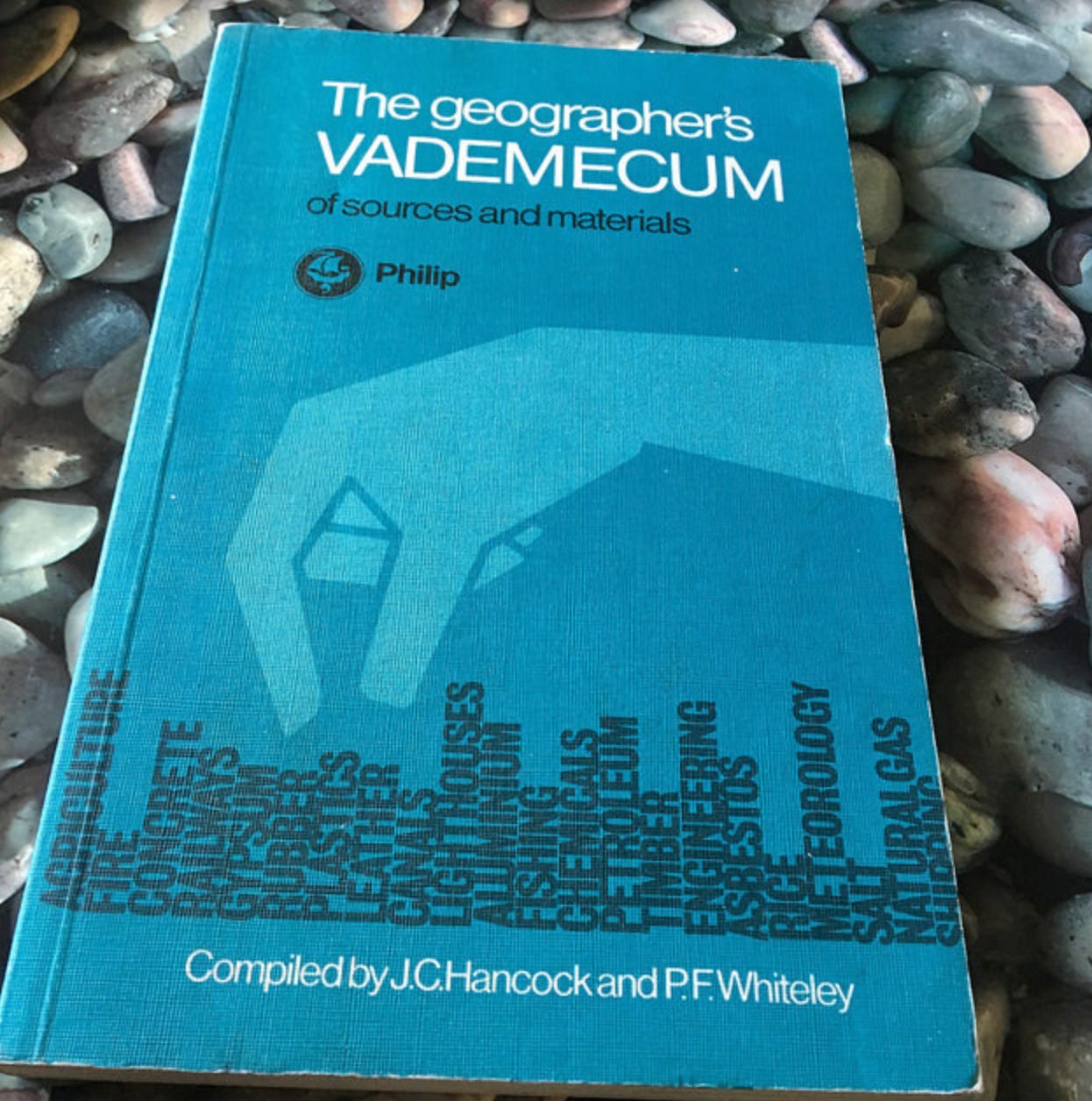
I have also posted about a Geography Vademecum that I have a copy of, which contained a whole range of sources of information back in the 1980s - predating the internet, with addresses that you could send off to for posters and other information.
I am also reminded of Maria Popova’s incredible Marginalian website which curates the very best writing on a vast range of topics.2
Coming very soon is a new blog which will act as a space to put those things which catch my eye: jottings, quotes, quirky images, pieces ripped from newspapers… a digital scrapbook of sorts….
Here’s a word-cloud I’ve created with synonyms for commonplace.
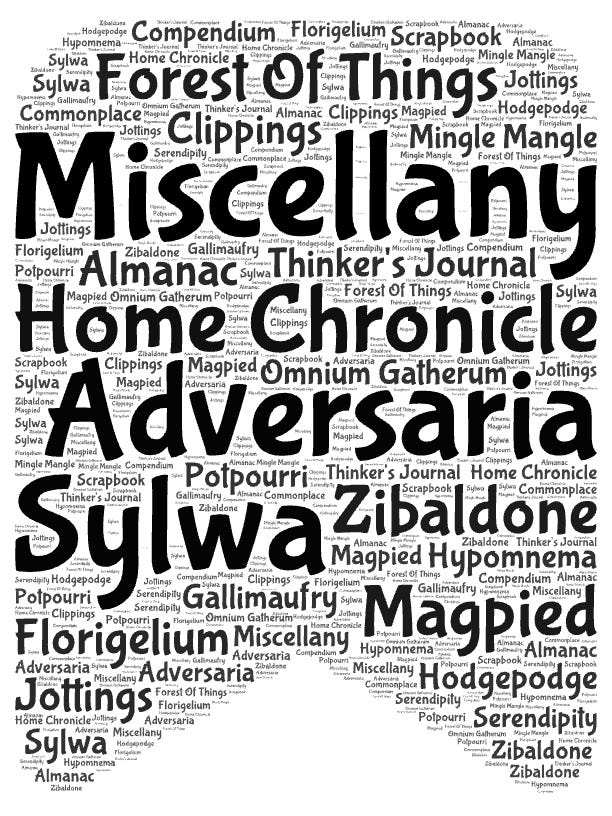
I’ll be investigating those quotidian discoveries that interest me…

To finish, a piece written by Bill Mead on the theme of success:
He has achieved success who has lived well, laughed often, and loved much;
Who has enjoyed the respect of intelligent men and the love of little children;
Who has never lacked appreciation of Earth’s beauty or failed to express it;
Who has left the world better than he found it;
Who has always looked for the best in others and given them the best he had;
Whose life was an inspiration.
Further Reading
Wikipedia entry: https://en.wikipedia.org/wiki/Commonplace_book
1
This is a lengthy document but well worth your time if you want to know more about Bill Mead and his extraordinary life and legacy (PDF document) - written by Hugh Clout for the British Academy: https://www.thebritishacademy.ac.uk/documents/1522/16_Mead_1820.pdf
2
https://www.themarginalian.org/
Comments